
- FREE SHIPPING on all orders over $149.99
A few years ago, finding a peptide supplier meant choosing from a handful of known names in the research community. Now? Type “buy research peptides” into Google, and you’ll get dozens of slick-looking websites, most making nearly identical claims about purity, quality, and fast shipping. Some of them are legitimate. A lot of them aren’t.
And here’s the tricky part — you usually can’t tell the difference just by looking at the website. The good ones and the sketchy ones often look equally polished these days. So how do you actually figure out which research peptide supplier deserves your money and, more importantly, your trust?
That’s what this guide is for. No fluff, no generic checklists copied from somewhere else — just a practical walkthrough of what separates a reliable supplier from one that’s going to waste your time and possibly compromise your research.
Let’s be honest — it’s easy to treat peptide sourcing like ordering lab supplies off a catalog. Pick a product, compare prices, hit buy. But peptides aren’t like buying pipette tips. The quality of what arrives at your door has a direct, sometimes invisible, impact on everything that happens after.
Here’s the problem: a peptide that’s been synthesized poorly, under-purified, or mishandled before shipping might still look completely normal in the vial. You won’t know anything’s wrong until your assay results start behaving strangely, or your data refuses to replicate, and at that point you’re troubleshooting a problem that started long before it reached your bench.
Picking the right peptide supplier upfront isn’t just a procurement decision. It’s risk management for your entire study.
This is the big one. Anyone can slap “99% pure” on a product label. Whether that claim means anything depends entirely on whether there’s actual data behind it.
When you’re vetting a research peptide supplier, here’s what you should be asking to see:
Good suppliers make this stuff easy to find. You’ll often see a CoA download link right on the product page. If you have to email and ask three times, or the answers feel vague and rehearsed, take that as your answer.
Where a peptide comes from matters just as much as how it’s tested afterward — maybe more. A company can run beautiful-looking tests on a poorly made product and still get numbers that look fine on paper, at least for some metrics.
Worth digging into:
Companies that are confident in their process tend to talk about it openly, even if they keep some proprietary details close. The ones who dodge the question, or get cagey when you push for specifics, usually have a reason for that.
Forget the testimonials section on their own website for a second — of course those are going to be glowing. What you want is the unfiltered version: forum threads, independent reviews, word of mouth from people in research who’ve ordered from them more than once.
A few things to pay attention to:
A supplier with consistent, independently verified credibility is almost always the safer bet over one whose only praise comes from their own marketing.
This one is underrated. A good peptide supplier should have people on staff who genuinely understand the science — not just a sales team reading from a script.
Test this yourself before you commit to anything. A solid supplier should be able to:
If you’ve been wondering where to buy research peptides and you send a technical question to a supplier you’re considering, pay close attention to what comes back. A vague, generic, or slow response tells you a lot more than their website copy ever will.
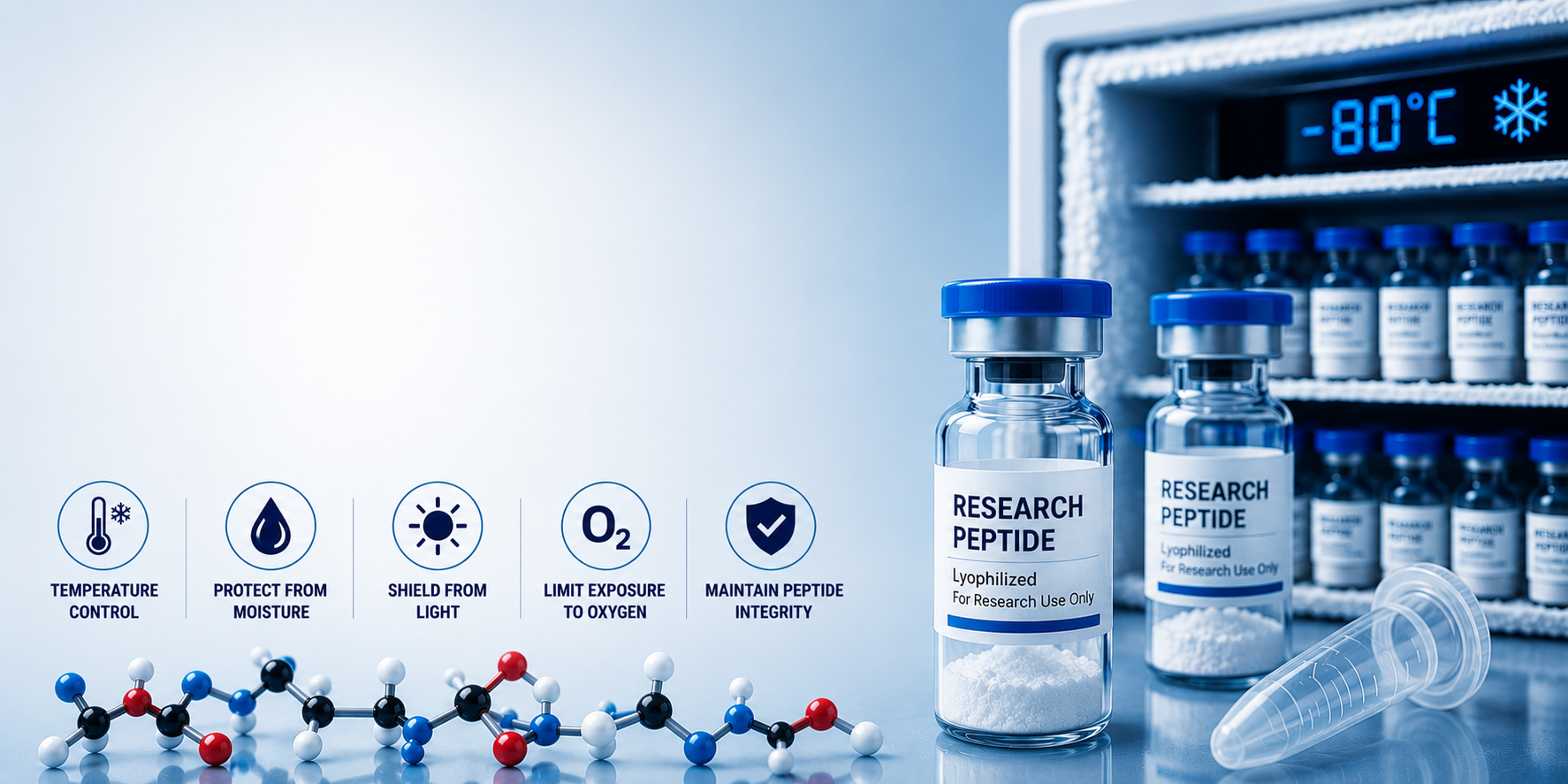
Here’s something people overlook constantly: even a peptide that was made perfectly can get ruined in transit. Heat, light, time sitting in a warehouse, careless packaging — all of it matters.
Things worth checking before you order:
A company can nail the science and still hand you a degraded product if they’re sloppy about the last mile. High-quality peptides aren’t just about what happens in the lab that makes them — it’s the whole chain, starting to finish.
Budget matters, especially if you’re working off grant funding or a lean lab budget. But peptides are one of those areas where chasing the lowest price tends to backfire.
Real synthesis, real testing, real quality control — none of that is cheap. So, when you see a supplier offering prices well below everyone else in the market, ask yourself what they’re skipping to get there. Usually it’s the third-party verification, or they’re using cheaper raw materials, or the purity numbers on the label aren’t quite honest.
That doesn’t mean the most expensive option wins by default either. It just means price needs to be one factor among several — not the deciding one — when you’re weighing a peptide supplier against the alternatives.
Regulations around research peptides are not the same everywhere, and they can get complicated fast. A responsible research peptide supplier operates within those boundaries and doesn’t try to dance around them.
Green flags here include:
Any supplier blurring these lines — even subtly — is introducing risk that goes beyond just “is this peptide pure.” That’s a legal and ethical problem, not just a quality one.
Sometimes it’s easier to just list what should make you close the tab. If you spot more than one of these from the same supplier, that’s usually enough information on its own:
None of these alone is necessarily a dealbreaker. But two or three together? That’s your answer.
If you’re still narrowing down where to buy research peptides for your lab, here’s a reasonably practical approach:
Taking the slower, more careful route at the start saves you a lot of frustration (and money) later, especially if your research depends on getting the same reliable compound over and over.
Choosing a research peptide supplier isn’t something to rush through just to get an order placed. The supplier you pick shapes the quality of everything that follows in your research — and that’s not an exaggeration.
High-quality peptides don’t happen by accident. They’re the result of careful synthesis, real testing, and a supply chain that takes handling seriously at every step. A supplier who’s serious about all of that will usually show it — through documentation, through how they answer your questions, and through consistency you can actually verify over time.
Take the extra hour to vet your next peptide supplier properly. It’s a small investment compared to what you stand to lose if the compound sitting in your freezer isn’t what the label says it is.